AP exams cover an enormous amount of material, and the temptation is to meet that scale with brute force — long cram sessions in the final week, fueled by caffeine and panic. There's a better way. A structured six-week plan built on proven learning principles will get you further, with less stress, than any last-minute marathon. Here's how to spend those weeks.
The Key Takeaway
AP success comes from consistency, not intensity. Six weeks of spaced, self-tested, targeted review will leave you walking into the exam calm and genuinely prepared — a far better place than the wired exhaustion of a final-week cram. Start early, test yourself often, and trust the process.
The principles behind the plan
Everything below rests on three ideas that cognitive science has validated repeatedly:
- Spacing — distributing review across weeks beats massing it into a few sessions.
- Retrieval practice — testing yourself builds stronger memory than rereading.
- Targeted review — spending your time on weak spots rather than comfortable material.
The plan simply organizes these into a schedule. Adjust the pacing to your subjects, but keep the structure.
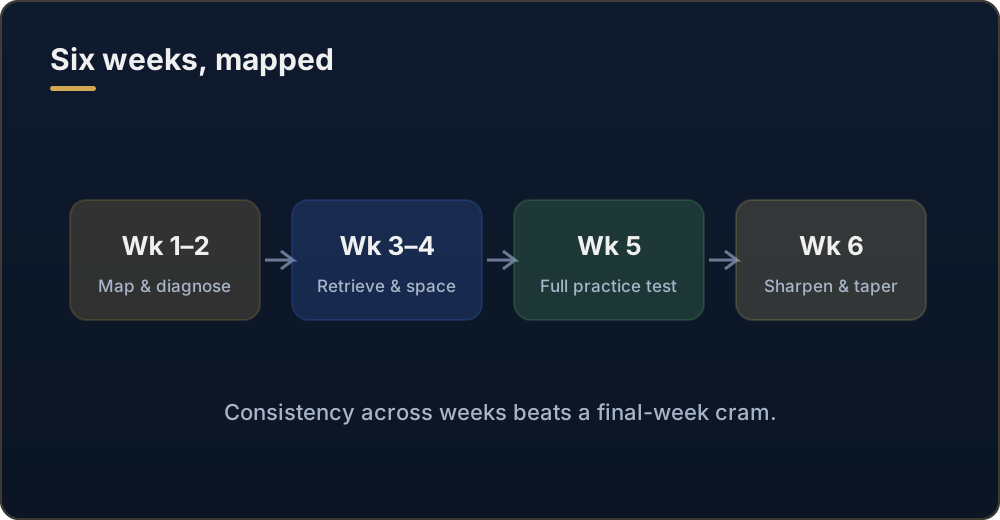
Weeks 1 and 2: Map the territory
Start by finding out what the exam actually covers. Download the official course framework and past free-response questions from the College Board. Take a diagnostic — a full or partial practice test — before you've reviewed anything. It will feel bad. That's useful information, not a verdict.
Use the diagnostic to sort every major unit into three buckets: solid, shaky, and lost. This map decides where your hours go. Then begin first-pass review of the shaky and lost units, converting your notes into questions and flashcards as you go rather than just rereading them.
Weeks 3 and 4: Retrieve and space
Now shift from reviewing to testing. Each study session should be mostly you producing answers from memory — through flashcards, practice questions, and blank-page brain dumps of whole topics. Every time you miss something, it drops back into a shorter review interval; every time you nail it, you stretch the gap before you see it again.
Mix your subjects and units within a week instead of blocking off whole days for one topic. This interleaving feels harder, but it trains you to switch contexts the way a real exam demands. Aim for shorter daily sessions across the week rather than a few long ones — the spacing is doing real work.
This is also where a good study app earns its keep. Tools like HistoryHype and EconHype handle the scheduling for you, resurfacing the facts and concepts you're on the verge of forgetting so your limited time lands where it matters.
Week 5: Full-length practice
Take at least one complete, timed practice exam under realistic conditions — no notes, no pausing, same time of day if you can manage it. The goal is not just content review; it's building stamina and calibrating your pacing. Free-response sections in particular reward practice, because knowing the material and writing a strong timed response are different skills.
Afterward, review every mistake carefully. Don't just note the right answer — figure out why you missed it. Was it a content gap, a misread question, or a timing crunch? Each cause has a different fix.
Week 6: Sharpen and taper
The final week is for consolidation, not new material. Cycle through your weakest topics one more time, keep doing short retrieval sessions, and review the free-response rubrics so you know exactly what graders reward. Resist the urge to cram late into the nights — sleep is when your brain consolidates everything you've practiced, and a rested mind recalls more than an exhausted one.
The night before, do a light review at most, then stop. Prepare your materials, and get a full night's sleep. You've done the work across six weeks; the last thing your memory needs is a panicked all-nighter undoing it.
A realistic weekly rhythm
- Most days: 30 to 60 minutes of retrieval practice on mixed topics.
- A couple of days a week: a longer session for free-response writing or a practice section.
- Once a week: reassess your solid / shaky / lost map and rebalance.