Most study plans are built in blocks: master chapter one, then chapter two, then chapter three. Practice twenty problems of one type, then twenty of the next. It feels tidy and logical. But a large body of research points to a surprising conclusion — mixing different topics and problem types within a single session often produces better, more durable learning than practicing them one block at a time. The technique is called interleaving, and like most powerful study methods, it feels worse while it works better.
The Key Takeaway
The neatest-looking study plan — one topic at a time, drilled to fluency — is often the least effective. Shuffle your practice so your brain has to keep deciding which tool to reach for, and you'll build skills that transfer to the unpredictable conditions of a real exam. It will feel messier and slower. That feeling is the sound of deeper learning happening.
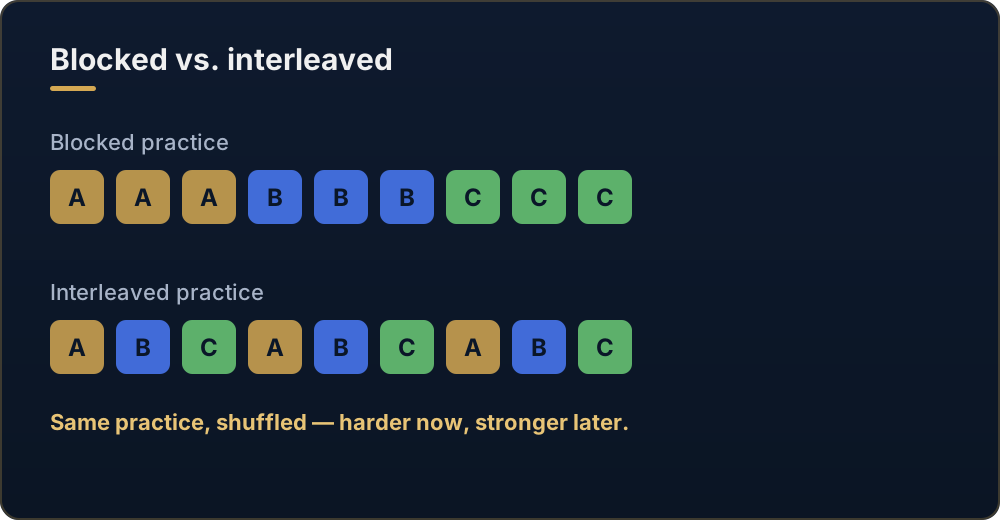
Blocked vs. interleaved practice
Imagine practicing three kinds of math problems, A, B, and C. Blocked practice looks like AAABBBCCC — you drill one type until it feels easy, then move on. Interleaved practice looks like ABCACB — you jump between them. In classic experiments by researchers such as Doug Rohrer, students who interleaved math practice performed dramatically better on a later test than those who blocked, even though the interleavers felt less confident and made more mistakes during practice.
Why the harder path wins
Two things make interleaving effective:
- It trains you to choose a strategy, not just execute one. In blocked practice, you already know every problem is type A, so you never practice the crucial skill of figuring out which approach a problem calls for. Real exams — and real life — don't announce the category in advance. Interleaving forces that discrimination on every problem.
- It builds in spacing automatically. When you rotate between topics, each one gets a small rest before you return to it, so every repetition is a spaced retrieval rather than a mindless repeat.
Why it feels bad (and why that's fine)
Blocked practice produces a smooth sense of mastery — each problem feels easier than the last. Interleaving disrupts that flow; you fumble more and feel less fluent. That discomfort is another example of a desirable difficulty: the struggle is the mechanism, not a sign of failure. Students consistently rate blocked practice as more effective even when interleaving demonstrably teaches them more — a reminder that how studying feels is a poor guide to how well it works.
How to interleave your studying
- Mix problem types in a set. Instead of doing all the derivative problems then all the integrals, shuffle them so you have to recognize what each one is asking.
- Rotate related subjects in a session. Thirty minutes of biology, then thirty of chemistry, then back — rather than a whole day on one.
- Interleave concepts that are easy to confuse. Interleaving is especially powerful for similar-but-distinct ideas, because contrasting them side by side sharpens the differences.
- Keep it related. Interleave topics within a domain that share underlying structure. Randomly jumping between unrelated subjects doesn't offer the same benefit.
A note on balance
Interleaving isn't a license for chaos. When you first meet a genuinely new skill, a little blocked practice helps you get the basic mechanics down. The gains come from switching to interleaving once you have a foothold — that's when mixing forces the deeper learning. Think of blocked practice as learning the notes, and interleaving as learning to actually play the song.