
There's a reason every piece of exam advice eventually circles back to the same unglamorous instruction: get some sleep. It sounds like your mother talking, but it's also some of the best-supported guidance in learning science. Sleep isn't downtime for your brain — it's when a huge amount of the actual learning gets finished. Skimp on it, and you undermine everything you studied while awake.
The Key Takeaway
Your brain does some of its most important learning while you're unconscious. Encode well during the day, then give your brain the deep, full night it needs to consolidate what you learned. Study smart, review a little before bed, and protect your sleep — especially before the exam. It's the easiest study upgrade there is, and you do it lying down.
Learning has two phases
When you study, you encode new information — but that fresh memory is fragile and easily lost. To last, it has to be consolidated: stabilized, strengthened, and woven into your existing knowledge. A great deal of that consolidation happens during sleep. As you rest, your brain replays and reorganizes the day's experiences, transferring memories from temporary storage in the hippocampus into more durable long-term networks in the cortex.
What different sleep stages do
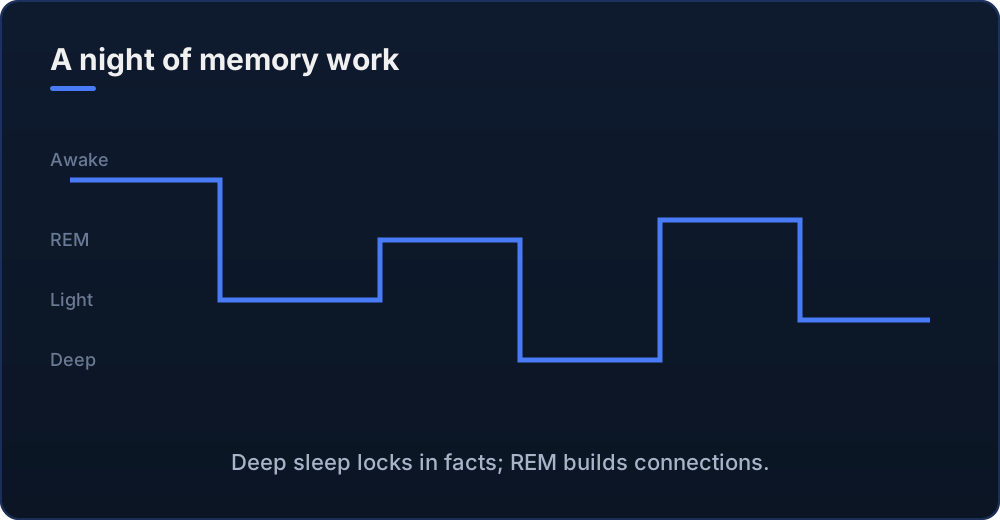
Sleep isn't uniform, and its stages play different roles:
- Deep slow-wave sleep, concentrated in the first half of the night, is especially important for consolidating facts and information — the declarative knowledge you cram for tests.
- REM sleep, more common toward morning, supports procedural skills, problem-solving, and creative connections between ideas.
Cut your night short and you disproportionately lose that morning REM — which is part of why a full night beats a fragmented one even at the same total hours.
Sleep loss hurts learning coming and going
Poor sleep damages memory from both directions. Beforehand, a sleep-deprived brain encodes new information far less effectively — the hippocampus simply doesn't absorb as much, so you learn less from the same study time. Afterward, missing sleep robs you of the consolidation window, so even what you did encode is more likely to slip away. An all-nighter is a double loss: you learn worse that night and fail to lock in what you managed to absorb.
How to study with sleep in mind
- Review before bed. A light review of important material shortly before sleep can improve retention, because it's fresh when consolidation begins. This is a gentle recap, not a stressful cram.
- Protect the night before an exam. A rested brain recalls more and thinks more clearly than a wired, exhausted one. Trading sleep for a few extra review hours is almost always a bad trade.
- Spread study across multiple nights. Several nights of sleep between study sessions means several rounds of consolidation — another reason spacing beats cramming.
- Consider a nap. Even a short daytime nap has been shown to aid memory consolidation. A brief rest after a heavy study block can help it stick.
Sleep is part of studying
The mindset shift that helps most is to stop seeing sleep as time stolen from studying and start seeing it as part of studying — the phase where the day's effort gets made permanent. Studying hard and then skipping sleep is like cooking a meal and then throwing it out before you eat. The work only pays off if you let your brain finish the job.