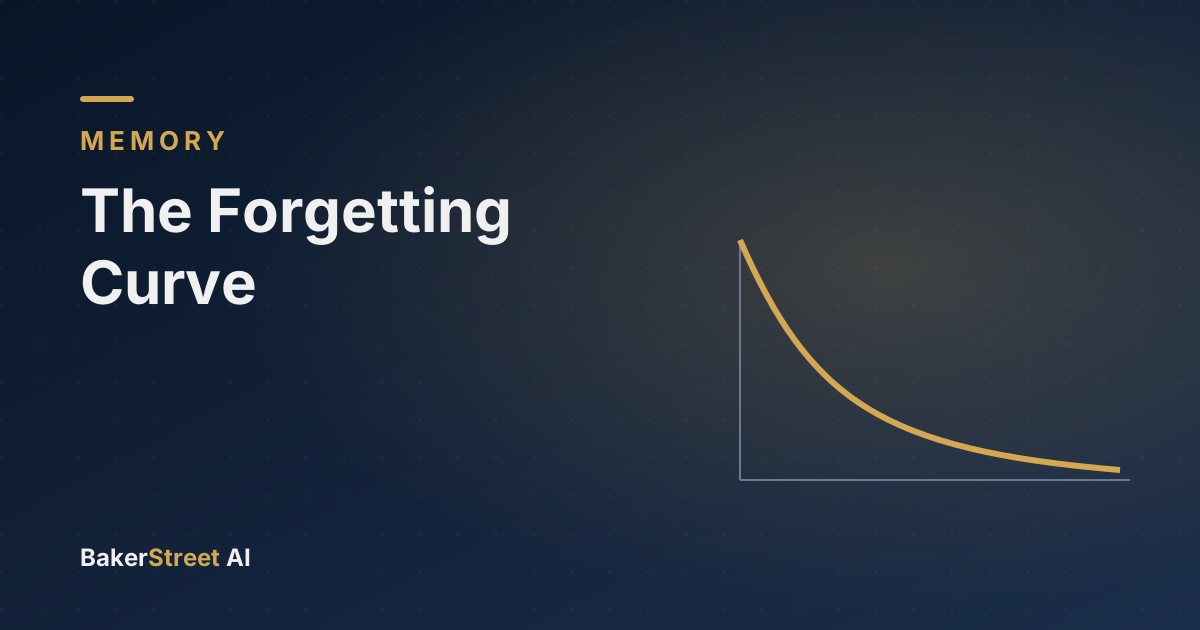
You study hard for a test, feel like you know the material cold, and a week later half of it has evaporated. It's a familiar and demoralizing experience — but it isn't a personal failing. It's one of the most reliable findings in all of psychology: the forgetting curve. Once you understand its shape, you can stop fighting your memory and start working with it.
The Key Takeaway
Forgetting is fast, normal, and useful. You beat the forgetting curve not by studying harder in one sitting, but by returning to the material at the right intervals with active recall — telling your brain, again and again, that this is worth keeping. Work with the curve instead of against it, and what you learn will finally stay.
Ebbinghaus and the shape of forgetting
In the 1880s, Hermann Ebbinghaus measured his own memory by learning lists of nonsense syllables and testing how much he retained over time. The pattern he found has held up for well over a century: memory decays rapidly at first — you lose a large share within the first day — and then the decline slows, with whatever survives lasting much longer. Plotted on a graph, it's a steep drop that flattens into a long tail. That steep early drop is why the material you crammed last night feels so shaky by the exam.
Forgetting isn't the enemy
It's tempting to treat forgetting as pure malfunction, but it's actually a feature. Your brain is constantly deciding what's worth keeping. Information you encounter once and never use again gets cleared away to make room; information you return to repeatedly gets flagged as important and preserved. Forgetting is your memory's way of asking, do you actually need this? The trick to learning is to keep answering yes — at the right moments.
How to flatten the curve
You can't stop forgetting, but you can dramatically slow it. Each of these tactics resets and flattens the curve:
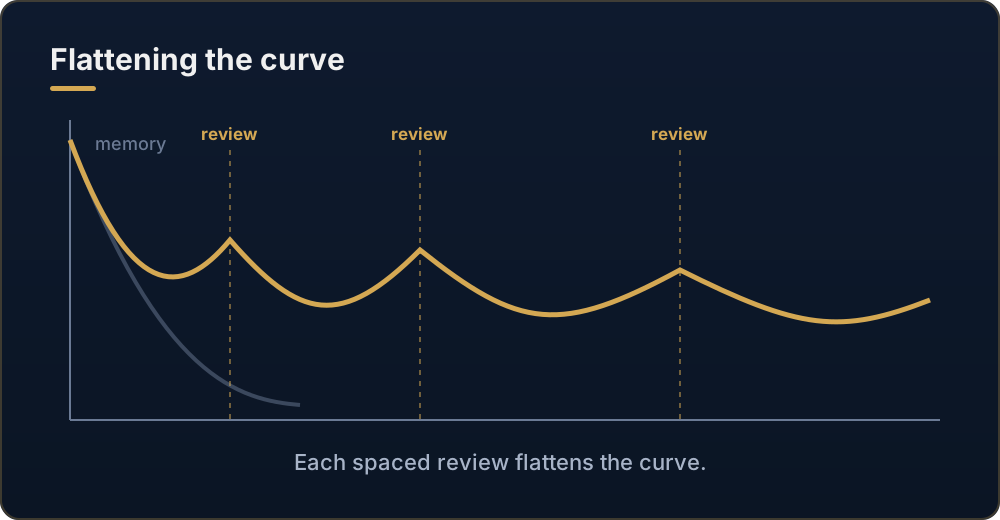
- Review before you forget — but not too soon. Revisiting material just as it starts to fade produces the biggest boost. Each well-timed review makes the next drop-off shallower, so the information lasts longer before you need to see it again.
- Retrieve, don't reread. Actively recalling a fact resets the curve far more powerfully than passively looking at it. Testing yourself is the single most effective way to interrupt forgetting.
- Space it out. A few short reviews spread over two weeks beat one long session, because each spaced review flattens the curve a little more.
- Sleep on it. Memory consolidation happens largely during sleep. A good night's rest after studying locks in more of what you learned than a late-night cram that steals from your sleep.
Turning the curve into a schedule
The practical upshot is an expanding review schedule: study today, review tomorrow, then in a few days, then in a week, then in a couple of weeks. Each successful review lets you wait longer before the next one, because the curve is flattening. This is exactly the logic behind spaced-repetition tools — they track your personal forgetting curve for each fact and resurface it at the moment review does the most good, so you spend zero effort on things you already know solid.
Set realistic expectations
Understanding the curve also protects your motivation. When you forget most of a lecture within days, that's not evidence you're a bad student — it's the default behavior of every human brain. The students who seem to remember everything aren't fighting the curve with willpower; they're beating it with better timing. Expect the early drop, plan your reviews around it, and forgetting stops feeling like failure and starts feeling like a schedule.