You knew this material last night. You walk into the exam, the clock starts, and suddenly it's gone — replaced by a racing heart and a blank mind. Test anxiety is one of the most common obstacles students face, and one of the most frustrating, precisely because it strikes people who are prepared. The good news: it's well understood, and there are proven techniques to keep it from hijacking your performance.
The Key Takeaway
Test anxiety blanks you out by stealing the mental space you need to think. You get it back by calming your body, clearing the worries out of your head, reframing nerves as readiness, and walking in genuinely prepared. Manage the anxiety, and the knowledge you worked so hard to build is finally free to show up when it matters.
Why anxiety makes you blank out
The mechanism is surprisingly concrete. Working memory — the mental workspace you use to reason through problems and retrieve answers — has limited capacity. When you're anxious, worried thoughts (I'm going to fail, everyone else is faster) flood that workspace and consume the very resources you need for the test. Researchers describe test anxiety as a kind of competing task: your brain is running the exam and running the worry at the same time, and the worry wins space it can't afford to lose. That's why a well-prepared student can still freeze — the knowledge is there, but anxiety is blocking the road to it.
A little stress is fine
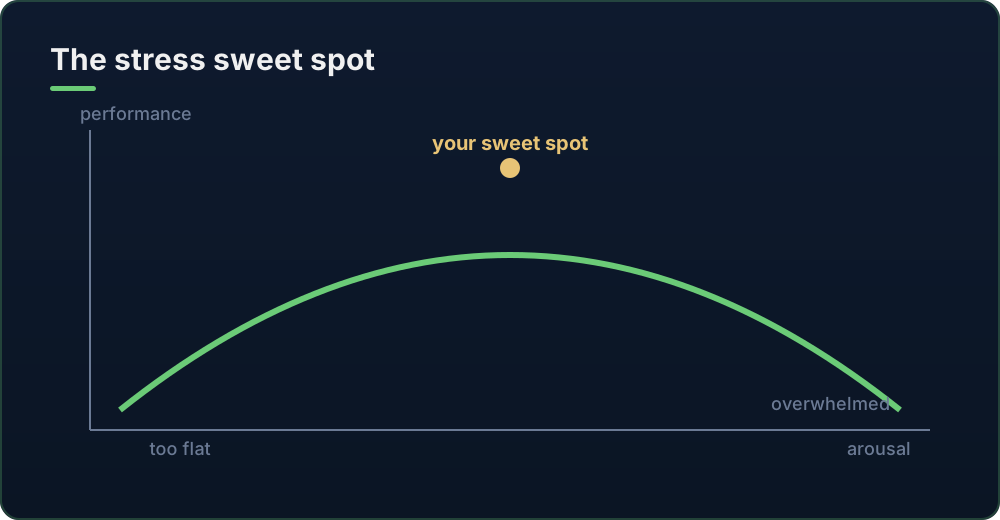
It helps to know that some arousal actually improves performance. The relationship between stress and performance is shaped like an inverted U: too little and you're flat and unfocused, too much and you're overwhelmed, with a productive zone in the middle. The goal isn't to feel nothing — it's to keep your arousal in that useful middle range. A few nerves mean you care and you're alert. Reframing that flutter as readiness rather than dread is itself a real technique.
Techniques that work
- Breathe slowly and deliberately. Slow, deep breathing activates your body's calming response and directly lowers physical arousal. A minute of slow breaths before you start can bring a racing heart back into the productive zone.
- Write down your worries first. Studies have found that spending a few minutes before an exam writing about your anxieties can improve scores — offloading the worries onto paper frees up the working memory they were clogging.
- Reframe the physical signs. A pounding heart and quick breath are also the signs of excitement and focus. Telling yourself I'm energized rather than I'm panicking measurably improves performance.
- Prepare thoroughly and realistically. Nothing calms nerves like genuine readiness. Spaced practice and self-testing not only teach the material — they build justified confidence that carries you on test day.
- Practice under realistic conditions. Doing timed practice tests makes the real thing feel familiar instead of threatening. Exposure lowers the fear.
During the exam
If anxiety spikes mid-test, have a plan. Pause and take a few slow breaths. Start with a question you find easy to rebuild momentum and remind yourself that you do know this. If your mind blanks on one item, move on and come back — grinding away while panicking only feeds the loop. A brief reset is almost always faster than pushing through a spiral.
When it runs deeper
For most students these strategies make a real difference. If test anxiety is severe — regularly causing physical distress or performance far below your preparation — it's worth talking to a school counselor or professional, who can offer structured approaches. Persistent, disabling anxiety is a common and treatable issue, not a character flaw.