
Open an AP World History textbook and it's easy to panic: thousands of years, hundreds of names, empires rising and falling across every continent. If you try to brute-force memorize it all, you'll drown — and still not do well on the exam. Here's the reframe that changes everything: AP World History is not a memory test. It's a thinking test. Study for the thinking, and the facts fall into place.
The Key Takeaway
Stop trying to memorize AP World History and start trying to understand it. Organize facts by theme, chase causes and comparisons, anchor details in stories, and practice the reasoning tasks the exam actually scores. Do that, and you'll walk in able to think like a historian — which is the whole point, and a far better bet than a head full of dates you'll forget by lunch.
What the exam actually rewards
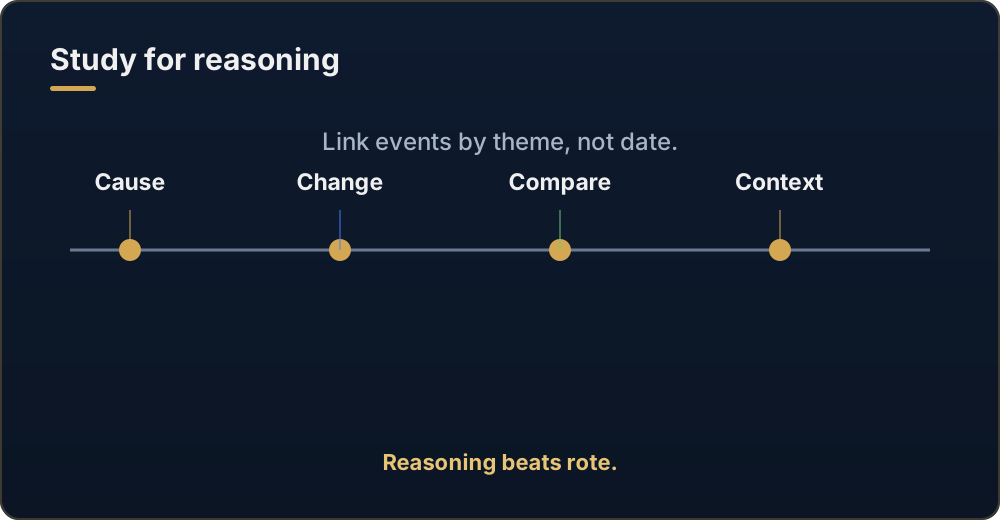
The AP World History exam is built around historical reasoning skills, not trivia recall. It asks you to analyze causation, trace continuity and change over time, compare societies, and situate events in a broader context — then argue a thesis with evidence in essays like the DBQ and the long-essay question. You'll never be asked to simply list the dates of a dynasty. You'll be asked why it rose, how it changed, and how it compares to another. Dates and names are the raw material; the reasoning is the point.
Study for connections, not lists
Once you know reasoning is the target, your study strategy shifts:
- Learn the themes. The course is organized around big threads — the environment, culture and belief, governance, economics, social structures, technology. Filing each fact under a theme turns a chaotic pile of details into an organized structure you can actually reason with.
- Ask why and what changed. For any event, practice explaining its causes and its consequences. This is exactly the analysis the exam demands, and it makes facts stick because they're connected to something.
- Compare across regions. Put two empires or revolutions side by side and articulate their similarities and differences. Comparison is both a tested skill and a powerful memory tool — contrast sharpens detail.
- Build timelines to see change over time. Laying events out visually reveals the long arcs of continuity and change that the exam loves to probe.
Make the facts stick through stories
You do still need a foundation of facts — you can't reason about events you know nothing about. But the way to retain them isn't rote repetition; it's meaning. History is made of stories, and stories are how human memory evolved to hold information. A vivid narrative about why an empire collapsed sticks effortlessly where a bare date bounces off. Attaching humor, imagery, and cause-and-effect to events encodes them through multiple channels at once — the same brain science that powers HistoryHype, which turns the AP World timeline into memorable, often funny stories rather than flashcard drudgery.
Practice the actual tasks
Because the exam tests skills, you have to practice the skills, not just absorb content:
- Write practice essays. The DBQ and long-essay reward a clear thesis and well-chosen evidence. Study the rubrics so you know exactly what graders look for, and practice against them.
- Do timed multiple-choice sets. These questions attach to document and source stimuli — they test analysis on the spot, so rehearse reading a source and reasoning quickly.
- Space and self-test. Spread your review across weeks and quiz yourself rather than rereading. The general laws of learning still apply on top of the history-specific strategy.